Platform Trailers
Drawbar Trailer
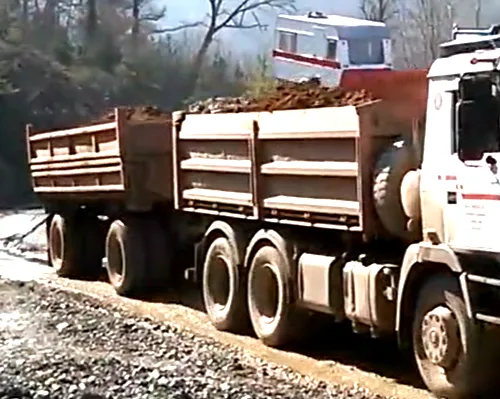
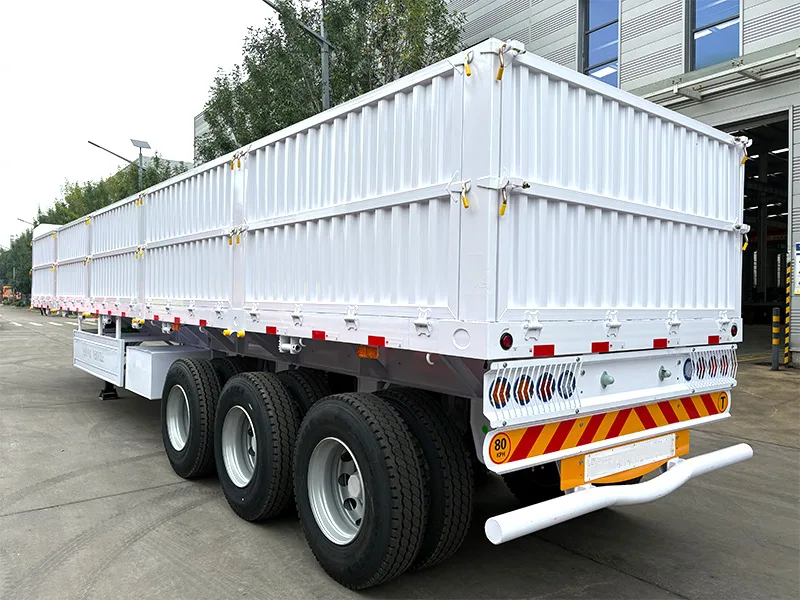
The SIGMA drawbar trailer is a full trailer with its own front and rear axle sets, towed behind a rigid truck via a drawbar coupling.
Over 10 years of manufacturing excellence, trusted by clients in 50+ countries.
Videos
Overview
A drawbar trailer for sale is built differently from a semi-trailer: the axles carry the entire deck weight, so the towing truck only supplies pulling power and a small drawbar load instead of a fifth-wheel load. SIGMA supplies the 3 axle drawbar trailer as the standard configuration for 30-ton loads, and the 4 axle drawbar trailer for operators running heavier general cargo or machinery at 40 tons. Deck lengths run from a compact 6m drawbar trailer for tight yard work up to 13.5m for long freight, all on a full trailer chassis built for repeated coupling and uncoupling in road-train service.
Features
- Full trailer carries its own weight on front and rear axle sets, so the towing truck's payload isn't reduced by a fifth-wheel load
- Rigid or hinged drawbar coupling for building road-train combinations behind a rigid truck
- Offered as a 3 axle drawbar trailer for 30-ton loads or a 4 axle drawbar trailer for 40-ton loads
- Flatbed deck rated for machinery, pipe, steel coil, and palletized general cargo
- Self-tracking front axle improves maneuvering in depots and tight yard turns
- Deck lengths from a 6m drawbar trailer up to 13.5m built to order
- Q345B chassis rated for repeated forklift and overhead crane loading
Applications
- Road-train combinations for long-haul general cargo
- Construction material and machinery haulage
- Agricultural produce and equipment transport
- Cross-dock and distribution center runs
- Timber and pipe haulage
- Mixed fleet operation alongside semi-trailers
What Sets a Drawbar Trailer Apart From a Semi-Trailer
A semi-trailer rests part of its weight on the towing tractor's fifth wheel. A drawbar trailer, also called a full trailer, carries its entire load on its own front and rear axle sets and connects to the towing truck through a drawbar rather than a kingpin. This means the truck pulling it can also carry a full body load of its own, since it isn't supporting any trailer weight. In the UK and across southern and East Africa the same combination goes by other names — operators call a rigid truck towing a full trailer a wag and drag (or wagon and drag) outfit, and the trailer itself a drag trailer — but the layout underneath is the same. Fleets running a flatbed semi trailer for standard routes often add drawbar trailers to the same truck for higher-volume runs, forming a road-train combination without buying a second tractor unit.3 Axle and 4 Axle Drawbar Trailer Configurations
SIGMA builds the drawbar trailer in 3-axle and 4-axle configurations depending on payload. Among 3 axle drawbar trailers for sale, this handles up to 30 tons and suits general freight and agricultural loads, while a 4 axle drawbar trailer for sale from the same range is rated to 40 tons for machinery, steel, and construction material. Both use a self-tracking front axle so the trailer follows the truck's turning path instead of cutting corners, which matters when a rigid truck and drawbar trailer combination is longer overall than a standard semi-trailer. Operators comparing capacity against a dry van trailer should note the drawbar trailer's open flatbed deck is built for crane and forklift loading rather than side or rear door access.Deck Length Options From 6m to 13.5m
Deck length is one of the first specifications buyers narrow down, and demand splits between a compact 6m drawbar trailer for sale for yard and short-haul work and longer 9m to 13.5m decks for line-haul freight. The shorter deck suits operators moving palletized goods or machinery between nearby facilities, where a tight turning radius matters more than total length. Longer decks are better matched to timber, pipe, and structural steel that need continuous support along the load. Fleets running both configurations alongside an interlink trailer combination can standardize axles, brakes, and tires across the yard.Chassis and Coupling Durability
Because a drawbar trailer is coupled and uncoupled far more often than a semi-trailer, the drawbar itself and its pivot bushings see more wear over the trailer's service life. SIGMA uses a reinforced Q345B steel drawbar with replaceable bushings and a pintle-hook or ring coupling matched to the customer's existing truck fleet. The flatbed deck is built on the same Q345B frame used across our flatbed trailer range, so timber decking, tie-down rails, and stake pockets can be specified the same way. Dual-line air brakes with ABS/EBS keep braking synchronized between the truck and trailer during road-train operation. Some fleets still spell it as a trailer draw bar (two words), but the coupling hardware and service points are identical either way.Frequently Asked Questions
What's the difference between a rigid truck with a drawbar trailer and a standard tractor-semi trailer combination?
In a semi-trailer combination the tractor's fifth wheel carries part of the trailer's weight. In a rigid truck and drawbar trailer combination, the rigid truck carries its own full body load and simply tows the drawbar trailer, which carries 100% of its own weight on its own front and rear axle sets. That's why fleets add a drawbar trailer behind a truck that's already loaded, instead of needing a dedicated tractor unit for it.
Which axle count should I order — 3-axle or 4-axle?
The 3-axle drawbar trailer covers up to 30 tons and suits standard general freight and agricultural loads. The 4-axle version steps up to 40 tons for machinery and construction material, typically where the rigid truck ahead is already running near its own GVW limit. Match the trailer's rated payload to what the combination's gross weight limit allows on your specific route, not just what the truck can physically tow.
Does the rigid truck need a special coupling to tow a drawbar trailer?
The truck needs a rated tow hook or pintle hitch matched to the trailer's coupling ring, plus a 7-pin or ISO electrical connector and dual-line air brake connections. SIGMA supplies the drawbar trailer with a pintle hook / ring coupling as standard and matches the coupling type to whatever the customer's existing rigid truck fleet already runs.
What is a 'wag and drag' trailer?
Wag and drag — also written wagon and drag — is the term used in the UK and much of southern and East Africa for a rigid lorry towing a drawbar trailer behind its own cargo body: the 'wag' is the truck, the 'drag' is the trailer. SIGMA's drawbar trailer is built for exactly this service, with a self-tracking front axle set so the drag follows the truck through tight turns and a coupling rated for repeated hitching cycles in road-train work.
Get a Quote
Interested in This Product?
Get factory-direct pricing and custom specifications. We reply within 24 hours.
Chat on WhatsAppor contact our engineers directly: [email protected]