4-Axle · Hydraulic Self-Steering Bogie · CIF Export
70 – 80 Ton Lowbed Trailer
Seventy to eighty tons is where a fixed 3-axle bogie runs out of margin and a 4-axle build takes over — the class for large excavators, big wheel loaders and mid-size crawler cranes moving cross-country on export routes.
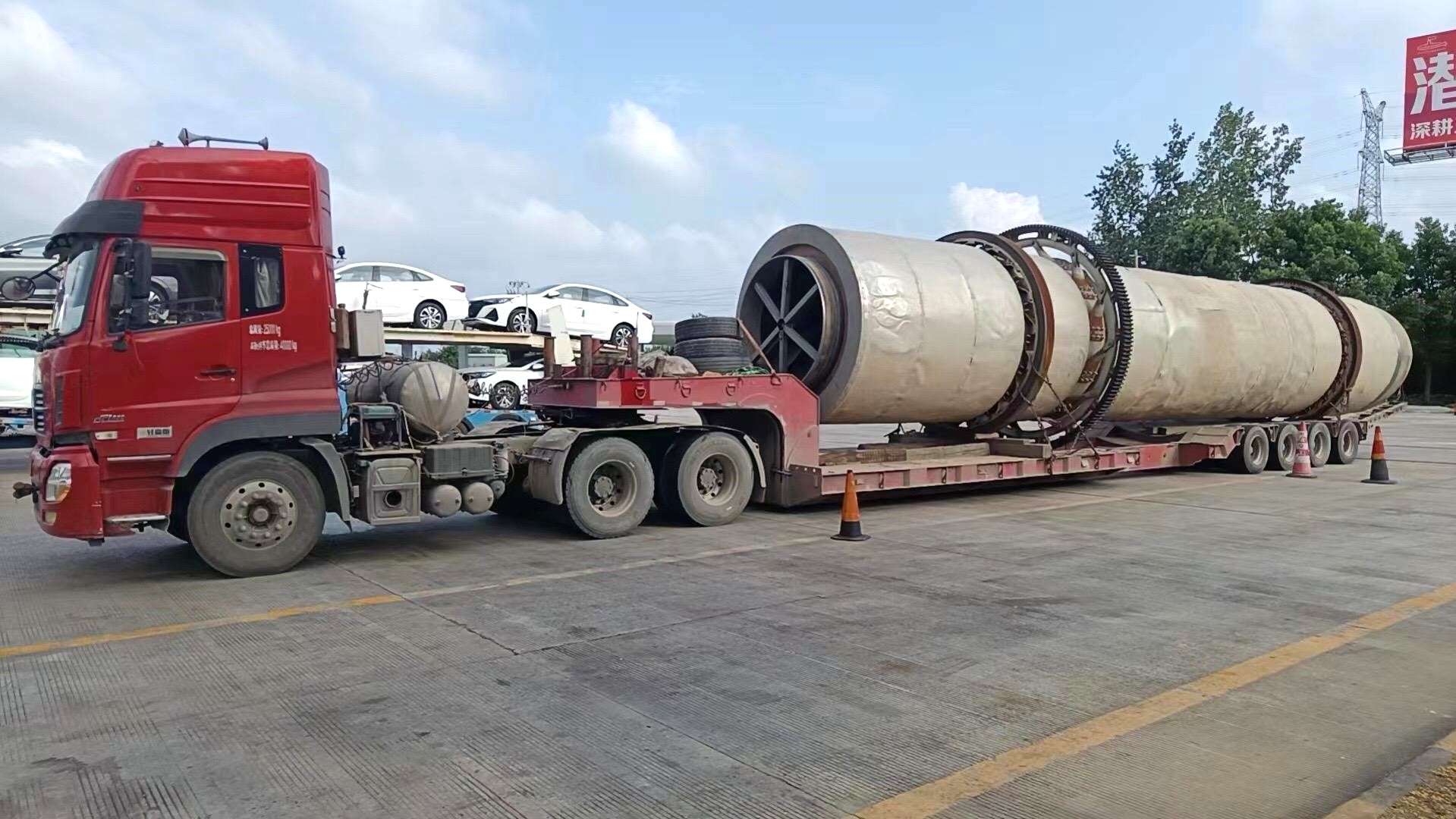
Over 10 years of manufacturing excellence, trusted by clients in 50+ countries.
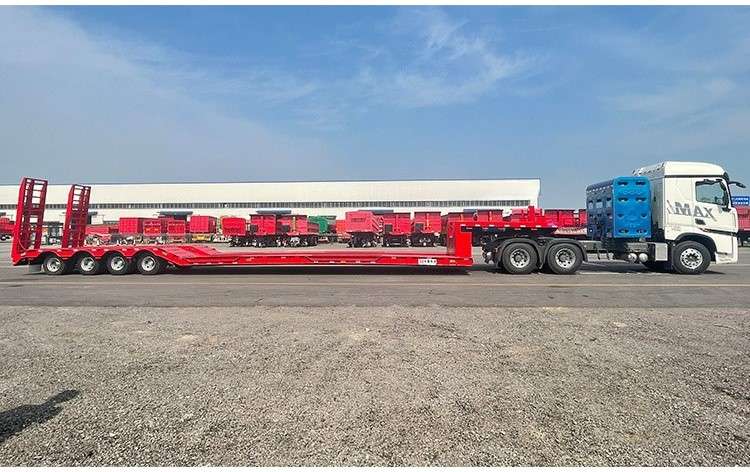
At 70-80 tons the load is usually a 55-65 ton excavator, a large wheel loader, or a compact crawler crane — machinery heavy enough that a 3-axle chassis pushes past what its axle rating and weighbridge margin can absorb. Four 13-ton axles under a reinforced box girder is the standard build at this rating, and most orders here specify a hydraulic self-steering bogie rather than a fixed one.
Why 4 Axles at This Weight
Three axles can carry 80 tons on paper, but the per-axle load it produces is illegal on most export routes and wears tyres fast on unpaved sections. A fourth axle spreads the same payload further, keeps individual axle loads within legal limits on more routes, and gives the trailer margin instead of running at its rated limit on every trip.
Hydraulic Self-Steering Bogie
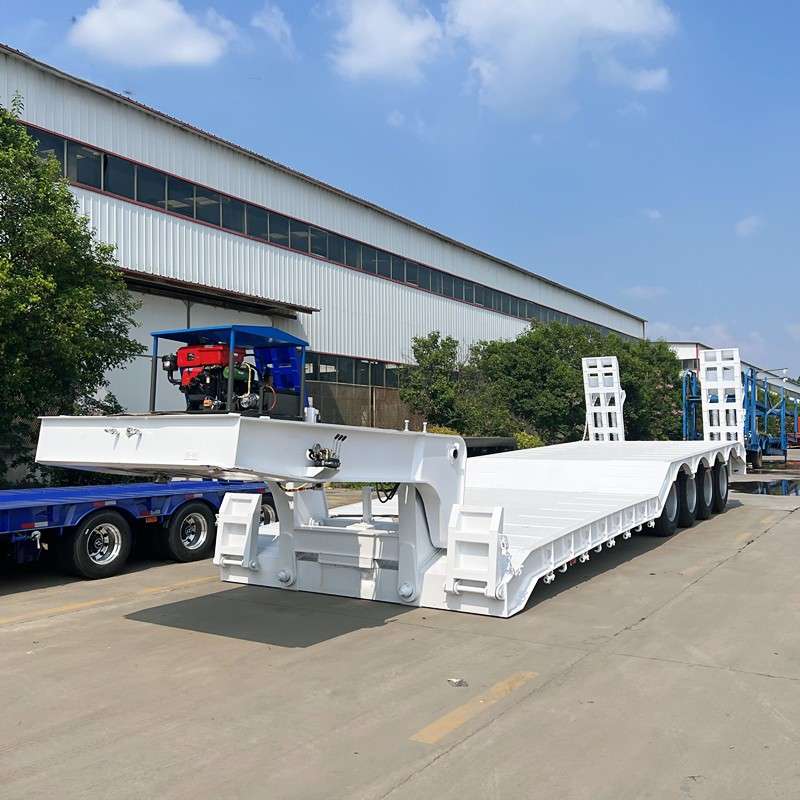
At 4 axles and up, a fixed bogie starts fighting the trailer through tight yard turns and switchbacks — the rear axles scrub sideways instead of tracking the front. A hydraulic self-steering bogie lets the rear axle group follow the turn radius of the gooseneck, cutting tyre wear on tight routes and making the trailer far easier to place in a loading yard. It costs more than a fixed bogie but is close to standard at this rating for export orders.
Gooseneck and Deck Options
Fixed gooseneck — lower cost, equipment loads over hydraulic fold-down ramps. Hydraulic detachable neck (RGN) — the neck disconnects and the deck settles to ground level for tracked equipment that can't manage a ramp. At this payload we recommend hydraulic ramps regardless of gooseneck type; mechanical ramps rated for 70-80 tons are heavy enough that the hydraulic assist pays for itself in loading time. See our RGN trailer line for dedicated detachable-neck builds.
Other Ratings We Build
Lighter loads: our 60 ton lowbed trailer and 50-55 ton RGN lowbed. Heavier: the 100-150 ton heavy haul lowbed, where above roughly 100-120 tons a hydraulic modular trailer usually replaces a fixed-axle chassis. Full range: lowbed trailer.
Frequently Asked Questions
What equipment needs an 80 ton lowbed trailer?
Typically a 55-65 ton excavator, a large wheel loader, or a compact crawler crane, once you account for attachments and fuel. If your machine is closer to 55 tons loaded, our 60 ton trailer is the more cost-efficient fit; tell us the make and model and we'll confirm.
Why does 80 tons need 4 axles instead of 3?
Three axles are legal for 80 tons in a few markets but produce per-axle loads that fail weighbridge checks on most export routes and shorten tyre and axle life. Four axles spread the load further and keep it within legal limits on more routes — tell us your destination and we'll check the local limit.
Is hydraulic self-steering worth the extra cost at this weight?
For most fleets, yes. A fixed bogie fights the trailer through tight turns at 4+ axles, scrubbing tyres and making yard maneuvering harder. Hydraulic self-steering lets the rear axles follow the turn radius, which is close to standard on export orders at this rating.
What is the delivery time and how is it shipped?
4-axle builds typically ship 30-40 days from order confirmation. These units usually move as breakbulk cargo given the size; the gooseneck can detach on RGN builds to reduce shipping height. We quote CIF to most African, Middle Eastern and Southeast Asian ports.
Get a Quote
Interested in This Product?
Tell us the machine you haul, its full loaded weight and your destination port — we will confirm axle count and quote CIF.
Chat on WhatsAppor contact our engineers directly: [email protected]